RX Direct · Weight Management
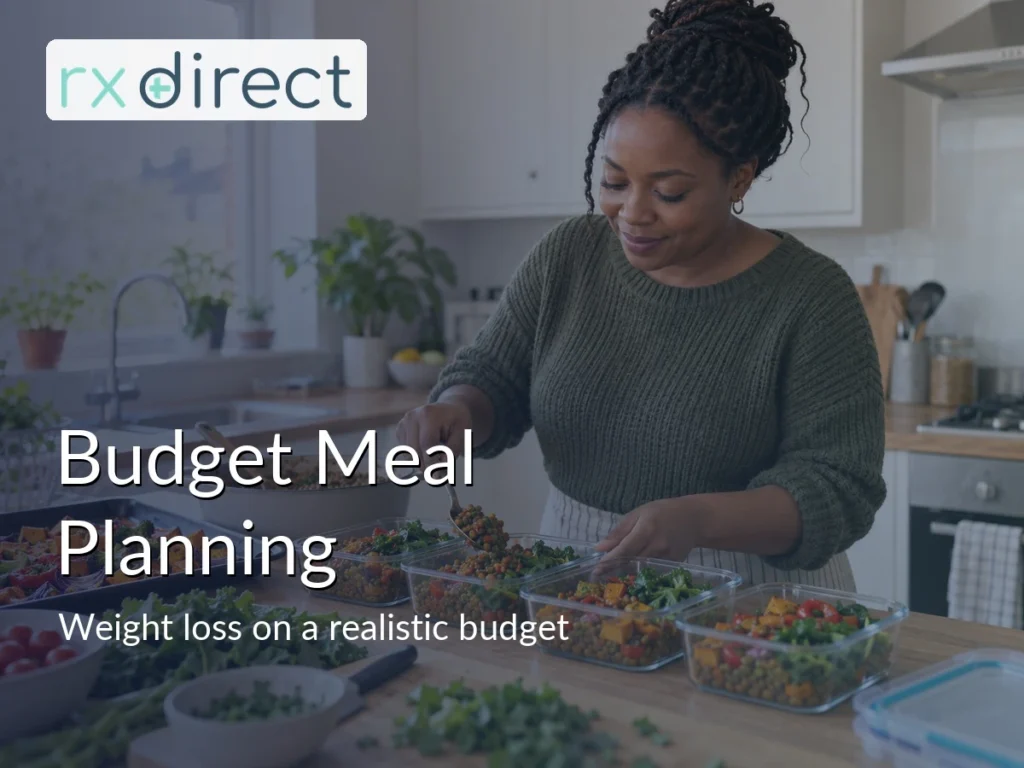
Build a Weight-Loss Meal Plan That Fits Your Budget
A realistic food shop, a handful of adaptable meals and a backup for busy days can make eating well easier without buying specialist diet products.
Quick Answer
Start with the meals you already eat, the time you have and the money available. Plan a few balanced dishes that share ingredients, compare prices by usable quantity and keep an easy backup meal. A weight-loss plan should still nourish you. If your appetite becomes too small to eat adequately, ask for advice rather than treating a lower food bill as proof that treatment is working.
Our weight-loss service starts with an online consultation form so a prescriber can assess suitability. A prescription is not guaranteed.
Start With the Week You Actually Have
Budget meal planning for weight loss starts with an honest look at your diary. A meal that needs an hour of cooking is unlikely to help on the evening you finish late. A large bag of salad is poor value if most of it is thrown away. We suggest planning around your most difficult days first, because those are often the days when an unplanned takeaway or skipped meal feels easiest.
Write down which meals happen at home, which need to travel and which are shared. You do not have to plan every mouthful. Choose two breakfasts, two lunches and a few evening meals you would happily repeat. Leave room for a social meal or a change of plans instead of making the week depend on perfect attendance at your own kitchen.
Your starting weight can help a clinician understand your needs, but BMI and its limitations do not tell you what your food budget or cooking skills should look like. Those details belong in the plan too.
- Count the meals you genuinely need to prepare before shopping.
- Identify one evening when time or energy will be limited.
- Check whether you can refrigerate or heat food at work.
- Ask household members which shared meals they will actually eat.
- Choose one simple backup that does not require a new shopping trip.
Keep Nutrition in the Plan
A cheaper meal is useful when it still gives you food you need and enjoy. The NHS Eatwell Guide is a broad framework for balancing different food groups over time. You do not need an expensive ingredient in every group at every meal. Ordinary beans, eggs, potatoes, oats and seasonal or frozen vegetables can help you assemble varied dishes. Adapt choices to allergies, preferences and any medical dietary advice.
Think about what makes a meal complete. A vegetable soup may be more useful as lunch when you add lentils and some bread than when you make the portion smaller and hope not to feel hungry. A bowl of pasta can include beans or fish and vegetables rather than relying on sauce alone. These are examples to adapt, not a prescribed menu or a promise of weight loss.
If appetite changes with Mounjaro make shopping quantities harder to predict, buy ingredients that you can use in more than one way. You may need smaller batches, but do not remove whole food groups simply because you are eating less.

Compare What You Will Use, Not Just the Sticker Price
Compare similar foods using the shelf price per kilogram or other unit, then consider how much you will use. A large package can cost less per gram and still cost you more overall if half remains uneaten. Small packs, frozen ingredients or sharing a purchase may suit a smaller household better. Convenience also has value when it makes a planned meal possible.
The NHS explanation of food labels can help you compare nutrition alongside cost. Look at similar products on the same basis rather than judging a food by a single claim on the front. A product advertised as high protein or low fat is not automatically the most affordable or most useful choice for your whole meal.
- Compare like-for-like foods by their unit price.
- Check the quantity you can realistically finish.
- Allow for the cost of cooking and any extra ingredients.
- Choose familiar foods before buying a cupboard of specialist alternatives.
- Review whether the saving survives food waste and unused leftovers.
Build a Few Flexible Meal Bases
A meal base is a combination you can alter without learning a new recipe each time. This reduces the number of separate ingredients you need. You might use a tomato and lentil mixture with pasta one evening and with a jacket potato another day. Keep enough variety to make meals appealing; eating the same dish indefinitely is not a requirement.
The table gives planning examples rather than a calorie-controlled diet. Portion sizes, nutritional needs and suitable ingredients differ between people. No supermarket prices are quoted because they change by retailer, location, package and offer. You can add your actual costs to a shopping list after checking them.
On smaller screens, scroll the table sideways.
| Meal Base | A Different Use | Planning Check |
|---|---|---|
| Lentil and tomato mixture | With pasta or a jacket potato | Will you use the second portion safely? |
| Cooked chicken or tofu | In a wrap or vegetable rice dish | Does it fit your dietary needs? |
| Eggs and vegetables | An omelette or a cooked breakfast | Do you have a low-effort cooking option? |
| Beans and wholegrain bread | A quick lunch with a vegetable side | Are these ingredients already on your list? |
Choose two bases to try rather than preparing everything at once. If you dislike lentils, another protein food may be a better starting point. If a recipe needs equipment you do not own, simplify the method. A plan becomes cheaper and more repeatable when it fits your kitchen.
Give Ingredients More Than One Job
Before buying an ingredient, name the second meal in which you will use it. A bag of carrots might go into a stew and a grated lunch salad. Plain yoghurt could be breakfast and part of a dressing. Frozen peas can be added to a cooked dish when needed, following the package instructions. This is a planning exercise, not a rule that everything must be used twice.
You can also choose ingredients around your usual cultural meals. Adapt the dishes your household already knows rather than replacing them with an unfamiliar diet menu. A familiar curry, stew or tray bake can often include vegetables and a protein food without becoming a completely different dinner. Ask for individual dietary help where medical conditions limit your options.
- Check the fridge and cupboards before writing the list.
- Choose a vegetable you can use in two planned dishes.
- Keep a familiar starchy food available for quick meals.
- Buy a protein food that fits both your tastes and budget.
- Put a realistic use-up meal into the diary.
Make a Backup Meal Part of the Budget
A backup meal is for the day your plan breaks, not for the day you fail. It might be beans on toast, an omelette with vegetables or a ready meal with an extra vegetable side. What matters is that you can make or obtain it with little effort and that it suits your health needs. Decide on it before the difficult evening happens.
The British Heart Foundation’s approach to sustainable weight loss emphasises changes that fit your life. In practice, that means giving yourself an option between elaborate cooking and abandoning dinner. A prepared ingredient or a convenient meal can be part of a useful plan. You do not need to prove commitment by making everything from scratch.
If Wegovy side effects are making food difficult, a backup menu is not a substitute for clinical advice. Tell your prescriber if you cannot eat or drink adequately. Do not keep cutting the food budget because symptoms are preventing you from eating.
Keep Food Costs and Treatment Costs Separate
Write your food budget separately from any prescription costs. Spending less on groceries does not make a medicine automatically affordable, and a treatment price does not include the meals you will still need. Consider the cost over the period you are discussing with your prescriber, including any delivery or review charges that apply. Ask us for a current breakdown rather than relying on an old advertised figure.
If Wegovy is being considered, ask how eating support and review will fit around your week. A Wegovy Pill has different treatment instructions from an injection, so a breakfast plan must fit the directions you are actually given. Mounjaro also needs an individual prescribing assessment. Food planning does not decide which medicine is suitable.
Understanding the daily routine for the Wegovy Pill can help you prepare questions about mornings without copying another person’s regimen. If money becomes tight, contact your prescriber before changing treatment. Do not stretch doses, use someone else’s medicine or buy from an unverified seller to protect the grocery budget.

Review the Plan After a Real Week
At the end of the week, look at what happened rather than scoring your discipline. Which meal took too long? Which ingredients remained untouched? Did a lunch travel well? Did you have enough to eat at the times that mattered? Keep the useful parts and alter one awkward part before the next shop.
A plan can reduce decisions even when your spending does not fall immediately. Buying a few basics may cost more in the first week, while a later week uses what is already available. Compare several ordinary weeks if you want to understand your spending pattern. Do not claim a saving until you have counted what you actually paid and wasted.
Questions about slower-than-expected weight change should be discussed in the wider context of health, eating, activity and treatment. A more organised food shop is a useful habit, but it cannot guarantee a particular change on the scales.
Try a Short Planning Session
Set aside a few minutes before your next shop. Choose the busiest day, select its easiest suitable meal and work backwards to the ingredients you need. Then add one meal you enjoy cooking and one meal that uses what you already have. This gives the week a structure without turning it into a large project.
If you share shopping, agree who buys the ingredients and where the list is kept. If you live alone, think about smaller quantities and whether a friend would enjoy an occasional shared meal. If you have limited cooking facilities, a dietitian or local support service may help you build options around them. We want the practical details to be visible in your care discussion.
You can take a short note of the plan to a treatment review: meals organised, problems encountered and support needed. That is more useful than describing the week as good or bad. A sustainable plan should be possible on an ordinary day, including the days when you are tired, busy or watching every pound.
Use the Weight Loss Calculator as a Conversation Starter
This calculator provides estimates for discussion. It cannot predict your results, assess medicine suitability or replace a consultation. Ask your prescriber about any figures you do not understand. You can continue reading without entering information.
Frequently Asked Questions
Do I Need a Diet App to Plan My Shop?
No. A paper list or a simple note on your phone can be enough. Choose a method you can update easily and share if someone else shops. Paid tracking tools may offer features, but they are not essential to making a useful meal plan. If tracking becomes stressful, discuss a less numbers-focused approach.
What If I Rely on a Food Bank?
Plan around what is actually available rather than a fixed ideal menu. Tell a healthcare professional if access to food is affecting how much or how regularly you eat. Ask local services about support you may be eligible for. Weight-management advice should recognise food insecurity and should not require costly ingredients.
Can I Include Familiar Family Foods?
Yes. Keep the foods that matter to your household and consider practical changes within those meals. You might serve components separately so different people can choose what suits them. Adults taking weight-loss treatment and growing children have different needs; do not impose an adult weight-loss eating plan on the whole family.
Should I Buy Food in Bulk With Friends?
It can help if everyone agrees on quantities, payment and how food will be divided and stored. Compare the cost with smaller packages first. Avoid buying more perishable food than you can use just because the unit price is attractive. Allergies and cross-contamination also need consideration when sharing preparation.
Are Delivery Subscriptions Automatically Cheaper?
No. Compare the subscription fee, minimum order, delivery charge and the price of foods you actually buy. A service may be convenient without saving money. Check whether recurring orders match your changing appetite and household needs, and make sure you understand how to pause or cancel before committing.
How Can I Plan Around Limited Kitchen Equipment?
Start with the equipment you can use safely and meals that need few steps. Ready-cooked or convenient ingredients may be more realistic than a recipe requiring an oven and several pans. Ask a registered dietitian for help if restricted facilities make it hard to eat a varied diet. Do not use an appliance against its instructions.
What If Shopping Has Become Physically Difficult?
Consider a smaller regular shop, delivery, shared shopping or practical help from someone you trust. Describe pain, mobility or fatigue problems to your healthcare professional rather than assuming weight loss alone will solve them. A plan should make food more accessible and should not depend on carrying heavy bags or standing for long periods.
Discuss a Weight Plan That Fits Your Circumstances
If you are considering treatment, complete our online consultation form and explain your health, current eating pattern and practical concerns. Our prescriber will assess suitability. Ask us about treatment costs before making a commitment.
Medical Information
This article provides general information for adults and does not replace individual medical advice. Follow your own care plan and the leaflet supplied with any medicine. Our online consultation assesses suitability; a prescription is not guaranteed.
Clinically Reviewed by Pharmacy Mentor
A pharmacist reviews the content to help ensure medicines are presented responsibly and that patient-facing health information is accurate, appropriate, and aligned with current clinical guidance.
Written on behalf of RX Direct by Pharmacy Mentor.
Added: . Editorial review: 8.